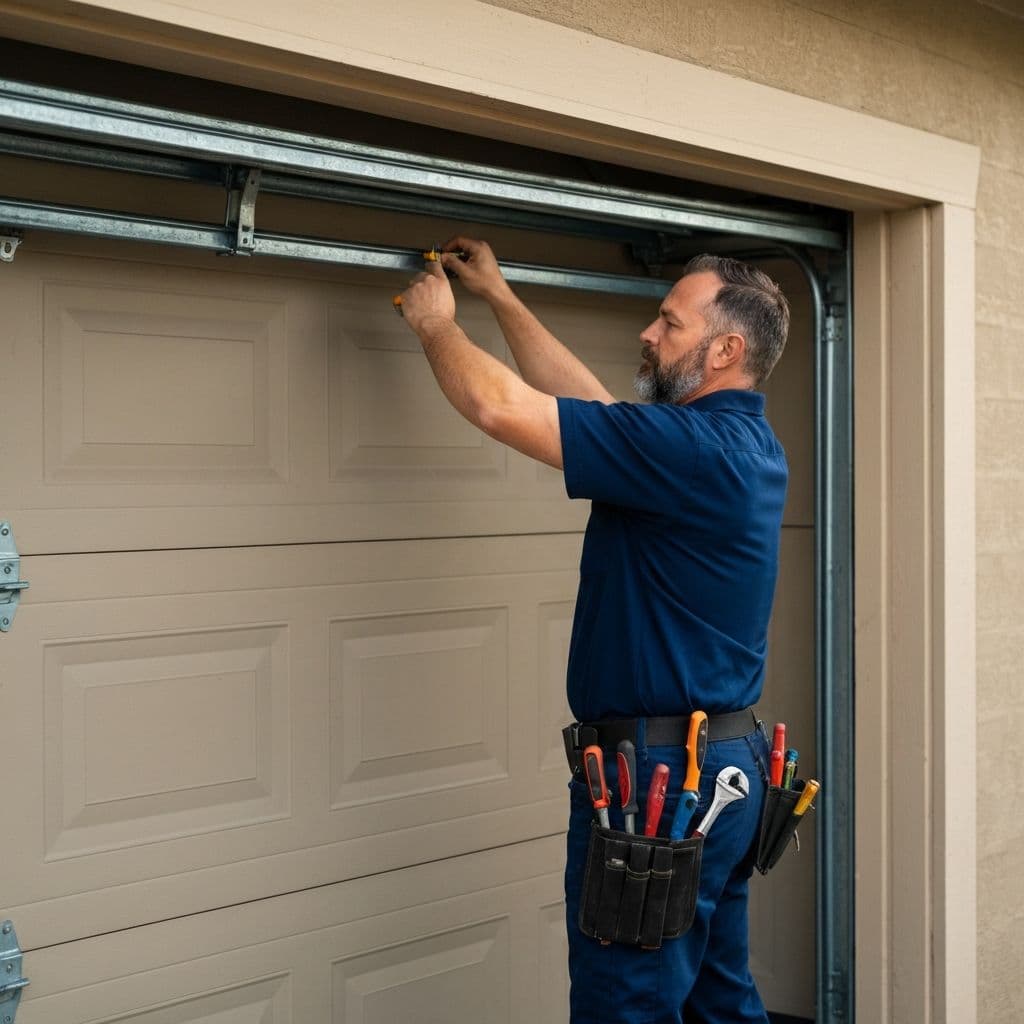
My Garage Door Hangs Crooked or Stops Halfway: What Went Wrong?
A garage door is supposed to move like an elevator: both sides rising together, dead level the whole way. So when one corner sits visibly higher than the other, or the door climbs a few feet and jams at an angle, something on one side has stopped carrying its share. Unlike a noisy roller or a slow opener, this is not a live-with-it problem. A racked door is partway to coming off its tracks, and every additional cycle pushes it closer. Stop running it, leave it where it is, and read on.
How Your Door Actually Lifts Itself
The two sides of a sectional door are lifted by two steel cables, one at each bottom corner, winding onto drums at the ends of the spring shaft above the opening. The spring supplies the force, the cables deliver it, and the drums keep both sides winding at exactly the same rate. That symmetry is the whole trick. If a cable frays, jumps off its drum, or a spring stops pulling evenly, one side rises slower than the other and the door racks sideways in its tracks.
A Frayed or Slipped Cable
Cables are the most common culprit, and in Southwest Florida they fail from the bottom up. The lowest few inches of cable sit at the wettest point of the garage, and salt air corrodes the strands at the bottom bracket long before the rest of the cable looks worn. A corroded cable frays, stretches, and eventually snaps or jumps its drum. Look (without touching) at each bottom corner of the door: a healthy cable runs straight and tight, while a failed one hangs slack, sits off its drum, or shows broomed-out broken strands.
Worn Rollers or a Bent Track
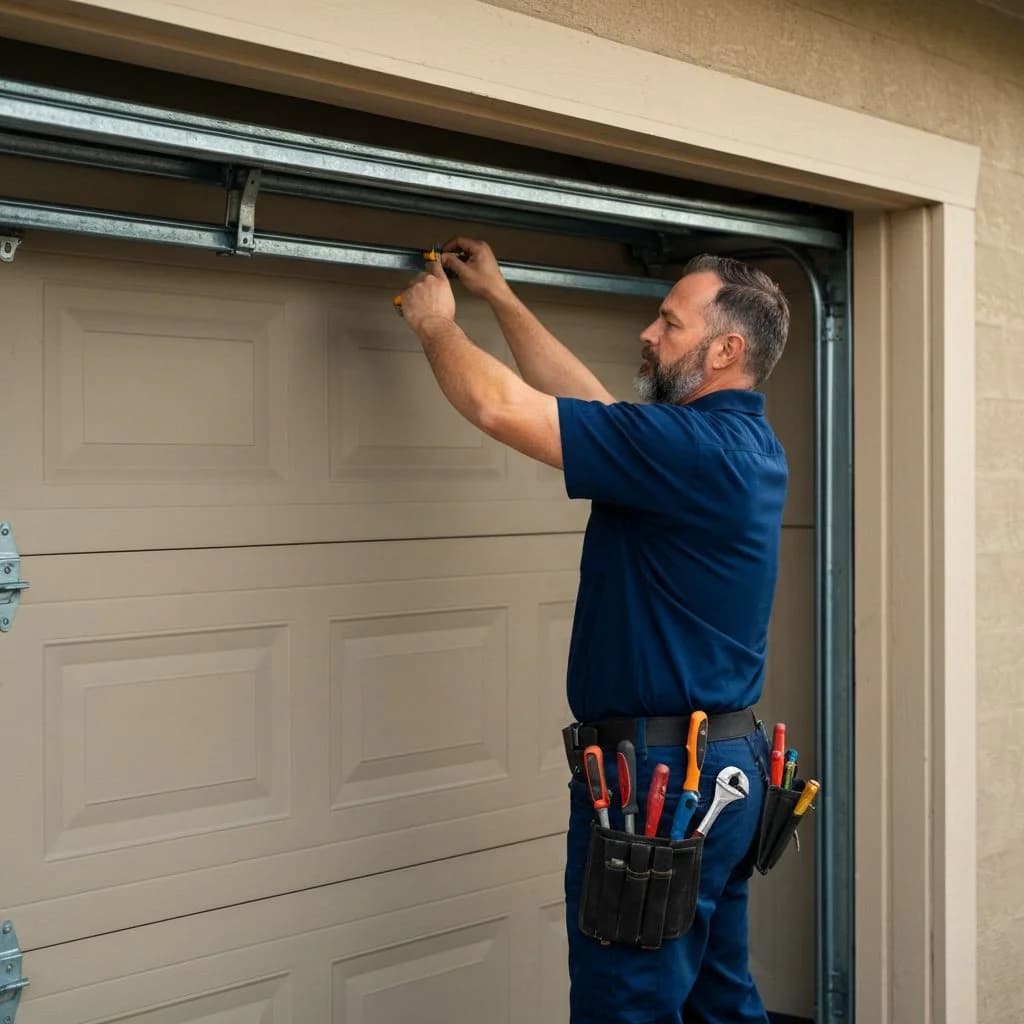
If both cables look intact and tight, the door may be binding rather than unbalanced. A roller with a flat spot or a seized bearing drags in the track instead of rolling, and a track dented by a car bumper or mirror pinches the rollers at the same spot every time. Binding on one side produces the same crooked, stuck-halfway behavior as a cable problem, but the tell is different.
- Binding usually announces itself: grinding, shuddering, or a rubbing sound from one side as the door moves.
- The door tends to stick at the same height every time, right where the track is damaged.
- A cable failure is quieter and more sudden: the door was fine yesterday and sits tilted today.
- With a cable problem you can often see the slack or the loose cable end at one bottom corner.
A Spring Pulling Unevenly
On doors with a pair of extension springs (one along each horizontal track), the two springs age at slightly different rates, and when one weakens or breaks, its side of the door goes heavy immediately. Torsion systems can develop the same imbalance if a spring has lost tension or the drums were set unevenly during a past repair. Either way, the result is the familiar tilt, and the fix is a rebalance of the whole system rather than a shim on one side.
What You Can Safely Check Yourself
- Look at both bottom corners: are both cables attached, straight, and tight? Do not touch or pull a cable, even a slack one. They are connected to the spring system and under tension.
- Scan both tracks for visible dents, debris, or a screw or pebble lodged in the roller path.
- Look at the rollers you can see: cracked wheels, flat spots, or a roller sitting half out of the track.
- Check the gap under the door when closed. A wedge-shaped gap confirms the door is no longer sitting level.
What a Technician Will Actually Do
The repair is a system reset rather than a single-part swap: secure the door, take the tension off the springs, reseat or replace the cables (in pairs, since both have the same wear), correct any bent track, replace failed rollers, and then rebalance the springs so both sides lift evenly again. Cables, drums, and track work all happen next to loaded springs, which is why this repair belongs to a professional. Our garage door repair team in Fort Myers handles crooked and off-track doors across Lee County, with same-day service on most calls.
The good news: caught early, a crooked door is a routine repair, and a rebalanced door with fresh cables usually runs quieter and smoother than it did before the problem started. The whole visit typically takes an hour or two. The costly version of this story is the one where the door was cycled until it jumped the tracks, so if your door is hanging at an angle right now, the smartest thing it can do today is nothing.
Frequently Asked Questions
Answers to common questions about this topic from your local garage door experts.
Door Hanging Crooked? Don't Run It Again
Leave the door where it is and let us take a look. We reseat and replace cables, fix bent track, and rebalance the springs so both sides lift evenly, with same-day availability across Fort Myers and Lee County.