How Long Do Garage Door Springs Last? Cycle Life, Explained
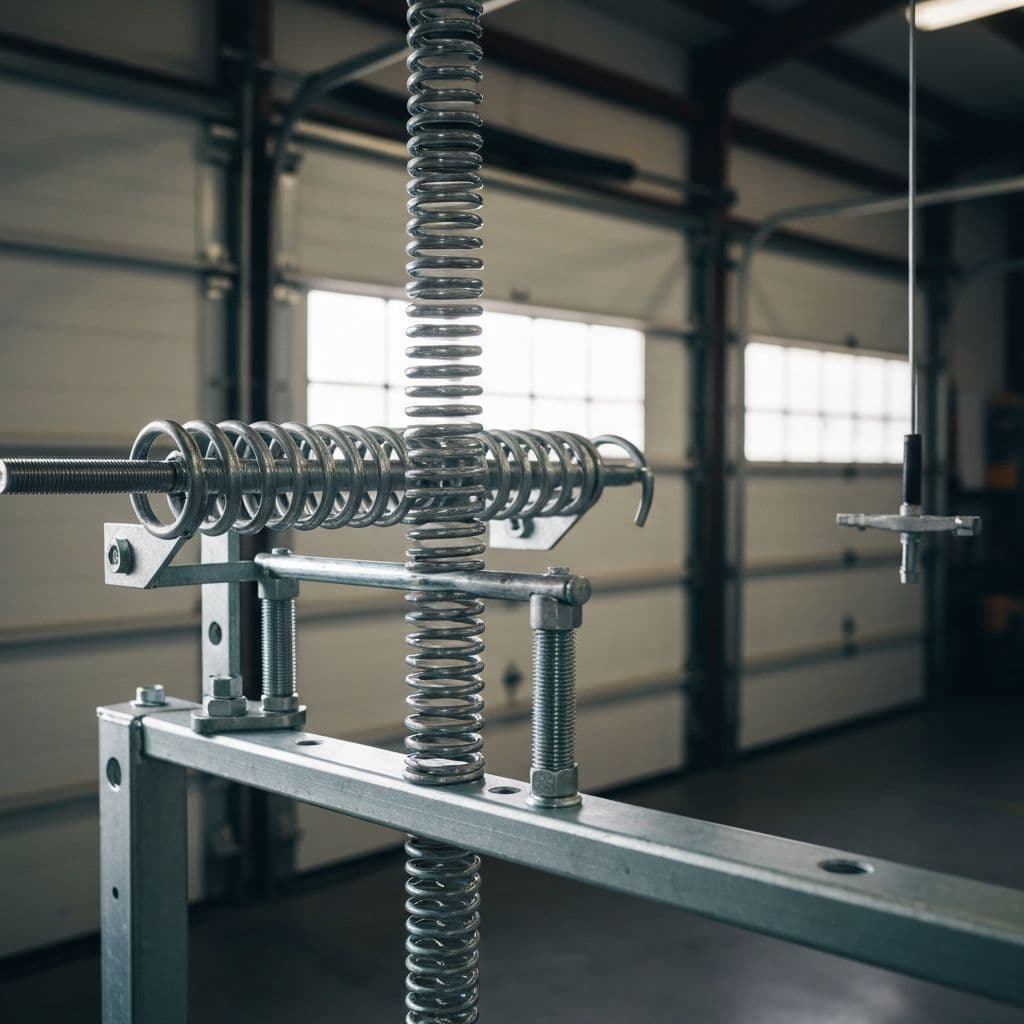
Your opener gets the credit, but the springs do the lifting. A sectional garage door can weigh as much as a refrigerator, and the torsion spring above the opening (or the pair of extension springs along the tracks) counterbalances nearly all of that weight. Springs are also the one part of the system with a built-in expiration: they are engineered for a set number of uses, and once those are spent, the spring breaks. Usually without warning, and usually at the worst time.
What a Spring Cycle Rating Actually Means
One cycle is one full trip: the door opens once and closes once. Springs are manufactured to a cycle rating rather than a number of years, and the most common rating for a standard residential torsion spring is 10,000 cycles. Higher-cycle springs exist and are a worthwhile upgrade for busy households, since a thicker wire spring doing the same job flexes less on every trip and lasts correspondingly longer.
Turning cycles into years is simple arithmetic. A household that uses the garage door twice a day spends roughly 700 cycles a year, so a 10,000-cycle spring can last well over a decade. A family with two cars, kids, and the garage as the main entry can easily run six to eight cycles a day, which burns through the same spring in three to five years. Same spring, very different lifespan. That is why the honest answer to "how many years do springs last" is always "it depends on how often the door moves."
Why Springs Wear Out Faster in Southwest Florida
A cycle rating assumes a clean, dry spring. Fort Myers, Cape Coral, and the rest of the coast do not offer that. Year-round humidity and salt air attack the steel, and even light surface rust matters more than it looks: rust pits the wire and adds friction between the coils, so every cycle takes a slightly bigger bite out of the spring's life. A spring that would reach its full rating in a dry climate often fails early here.
- Rust and corrosion: the top lifespan killer near the Gulf. Pitted wire concentrates stress and cracks sooner.
- A door out of balance: if the spring no longer matches the door's weight, both the spring and the opener strain on every cycle.
- The wrong spring for the door: an undersized spring installed in a past repair works overtime from day one.
- Added door weight: water-swollen panels, new insulation, or layers of paint all make the spring lift more than it was sized for.
Warning Signs a Spring Is Near the End
- The door feels heavy when you lift it manually, or the opener strains and moves slower than it used to.
- The door opens a few inches and stops, or reverses on the way up.
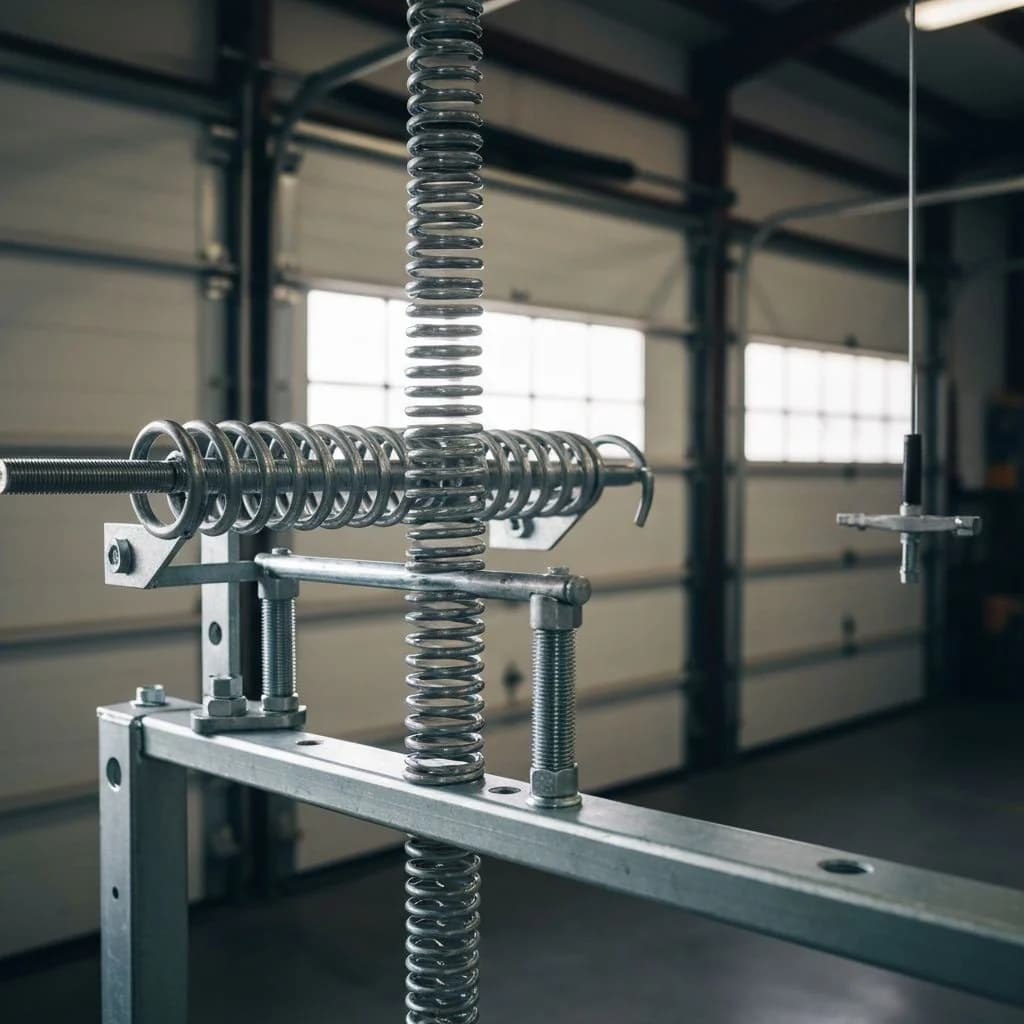
- You can see rust, pitting, or a stretched section on the spring above the door.
- The door slams shut faster than it used to instead of settling closed.
- A visible gap in the torsion coil: that spring has already broken, even if the door still moved once or twice.
- A loud bang from the garage with nobody in it. That sound is very often a spring letting go.
The Two-Minute Balance Test
You can check spring health without touching the spring itself. With the door fully closed, pull the opener's emergency release cord so the door moves freely. Lift the door by hand to about waist height and let go gently. A healthy spring system holds the door in place. If the door sinks or falls, the springs are no longer carrying the weight and are near the end of their life. Reconnect the opener when you are done, and if the door failed the test, stop there. Do not keep cycling a door the springs can no longer hold.
If One Spring Breaks, Should Both Be Replaced?
On doors with two springs, both were almost always installed on the same day, which means they have the same number of cycles on them. When one breaks, the other is at the same point in its life and is statistically next. Replacing both in one visit costs less than two separate service calls and resets the whole system to a matched pair, which also keeps the door lifting evenly instead of racking to one side.
Leave the Actual Replacement to a Pro
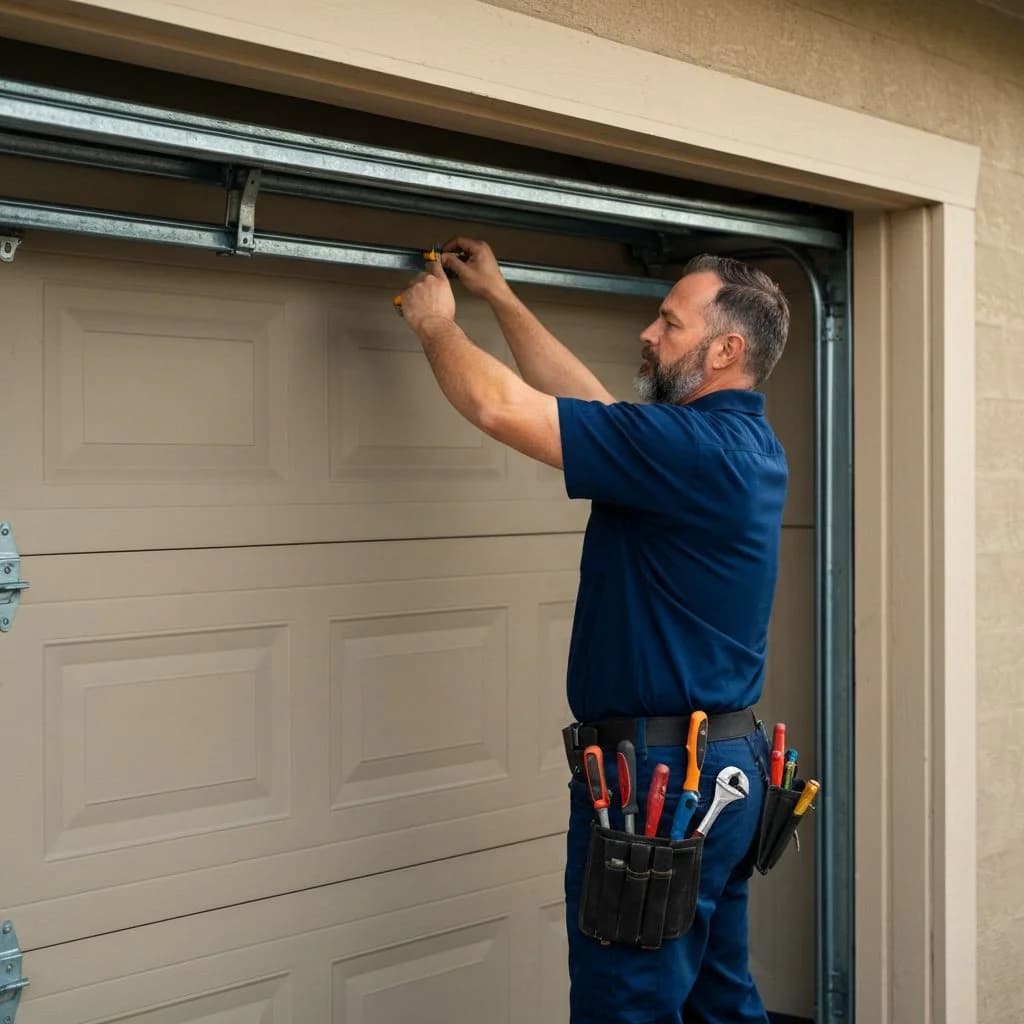
Spring replacement is the one garage door job that should never be a DIY project. The spring is under load through the entire procedure, and the winding process is where most garage-related injuries happen. If your door failed the balance test, or you heard the bang and now the door will not lift, our garage door spring replacement in Fort Myers team replaces broken and worn springs with high-cycle parts suited to Southwest Florida humidity, usually the same day you call.
Frequently Asked Questions
Answers to common questions about this topic from your local garage door experts.
Think Your Springs Are on Borrowed Time?
We'll check spring condition, door balance, and hardware in one visit, and give you a straight answer about how much life is left. Same-day spring replacement is available across Fort Myers and Lee County.